Feinberg should create a DRPM for drones
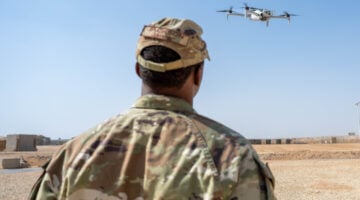
Amid the recent drone boom, the Pentagon needs to create a single solid framework for all of the relevant programs to be effectively managed under, Rebecca Grant of the Lexington Institute writes.
Check out an excerpt from "Project Maven: A Marine Colonel, His Team, and the Dawn of AI Warfare" by Katrina Manson.
Private capital is pouring into defense firms, but unless the relevant stakeholders align, the surge may fail to produce proper returns, according to two op-ed authors.
Secretary Pete Hegseth’s push for faster, more commercial defense acquisition will fall short unless Congress also gives the Pentagon the flexible budget authorities already available to civilian agencies, Bill Greenwalt writes.
As Gulf countries reassess defense needs after the Iran conflict, new entrants may find a windfall, writes Alek Jovovic of CSIS.
Disruption at the Strait of Hormuz will set off a chain reaction of pressure through the global shipping network, requiring international defense efforts, writes US Navy Supply Corps Capt. Michael Kidd.
Breaking Defense Europe will launch May 4 with Tim Martin and Elisabeth Gosselin-Malo as co-editors.
Adm. Daryl Caudle’s Fighting Instructions aims to guide the Navy’s future, but it does not make the tradeoffs or force-design decisions a true strategy requires, Bruce Stubbs writes.
New Pentagon requirements reforms need to account for whether the industrial base can actually build systems at the desired scale, John G. Ferrari and Dillon Prochnicki write.
When the Pentagon stops buying, it doesn’t reflect “demand signal,” but “execution volatility” for smaller suppliers, Rachel Gorken, president of GMS Industrial Supply, writes in this op-ed.
A doctrine of air denial leads to stalemates and drawn out conflicts, while air superiority can lead to decisive victory, Lt. Col. Grant "SWAT" Georgulis writes.
America's armed forces already suffers damages and handicaps due to climate change, and recent action is only going to make it worse, writes Will Rogers of Johns Hopkins University.
Focusing on the Coast Guard's development can help the US match countries like China who have already moved on the trend.
An executive from Textron argues that while new entrants can help the Pentagon, the department needs to remember that experience matters.
Proxies, such as the Houthis, should be heavily considered by the US while measures are taken against Iran.